
Table of Contents
When consumers evaluate a pair of sunglasses or optical frames, they typically look at aesthetic design, wearing comfort, and lens clarity. However, the key factor behind consistent quality and long-term frame durability lies deep within precision mold engineering. Among all heat-treatment techniques, mold quenching plays a crucial role in maintaining dimensional accuracy, surface finish, and cost-efficiency in high-volume eyewear production.
📌 B2B Executive Summary
Mold Quenching is a controlled heat-treatment process that rapidly cools mold steel to drastically improve its hardness, wear resistance, and structural stability. In injection molding for eyewear (using materials like TR90, Polycarbonate, and Nylon), quenching prevents mold deformation, flash formation, and dimensional drift over tens of thousands of cycles. Combined with tempering, properly quenched tooling guarantees batch-to-batch consistency and lower long-term manufacturing costs for optical brands.
1. What is Mold Quenching in Eyewear Manufacturing?
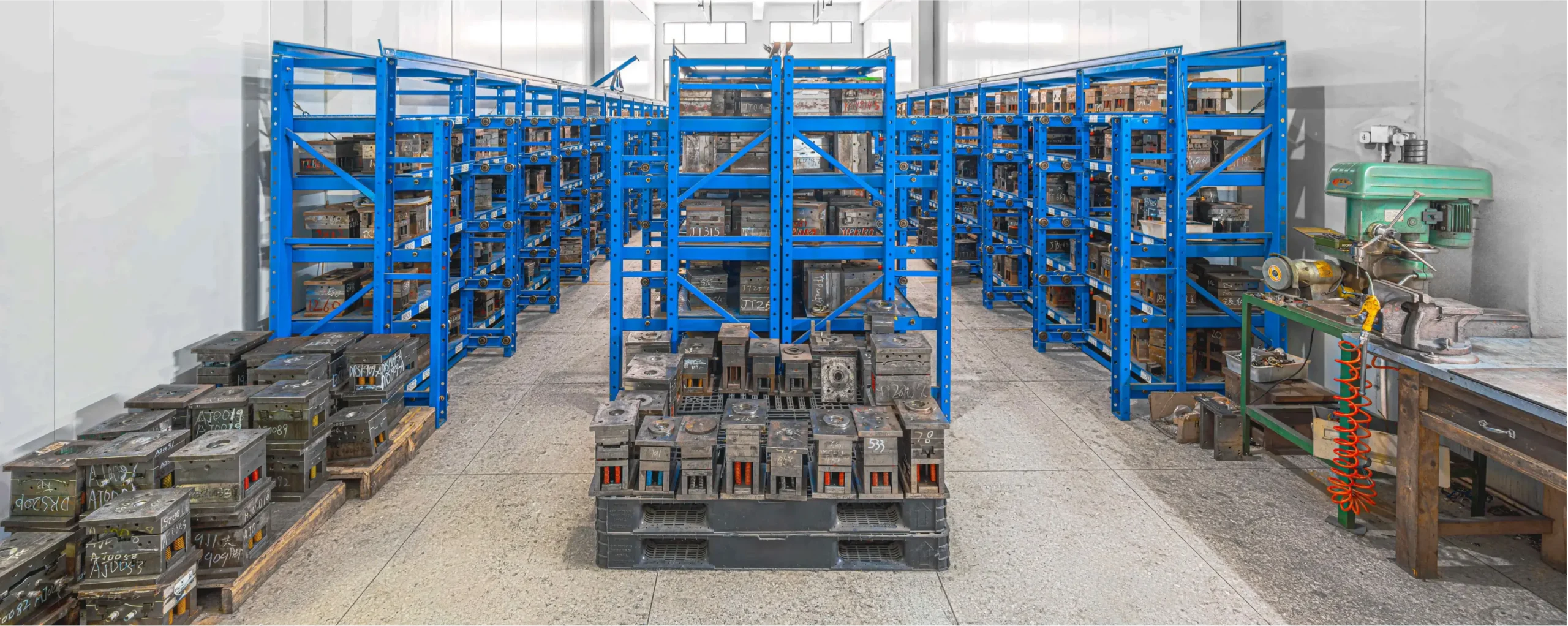
Mold quenching is a precise thermal process where mold steel components are heated to critical temperatures and then rapidly cooled using specialized mediums (gas, oil, or polymer).
This process alters the crystalline structure of the steel (transforming austenite to martensite), delivering key physical enhancements:
Superior Hardness: Resists continuous high-pressure injection cycles.
High Wear Resistance: Prevents friction-induced degradation from engineering resins.
Thermal & Mechanical Stability: Minimizes plastic deformation under cyclic heating and cooling.
Without proper hardening, molds subjected to continuous thermal and mechanical stress gradually lose precision, causing high defect rates and assembly issues.
2. Why Precision Molds Dictate Frame Quality
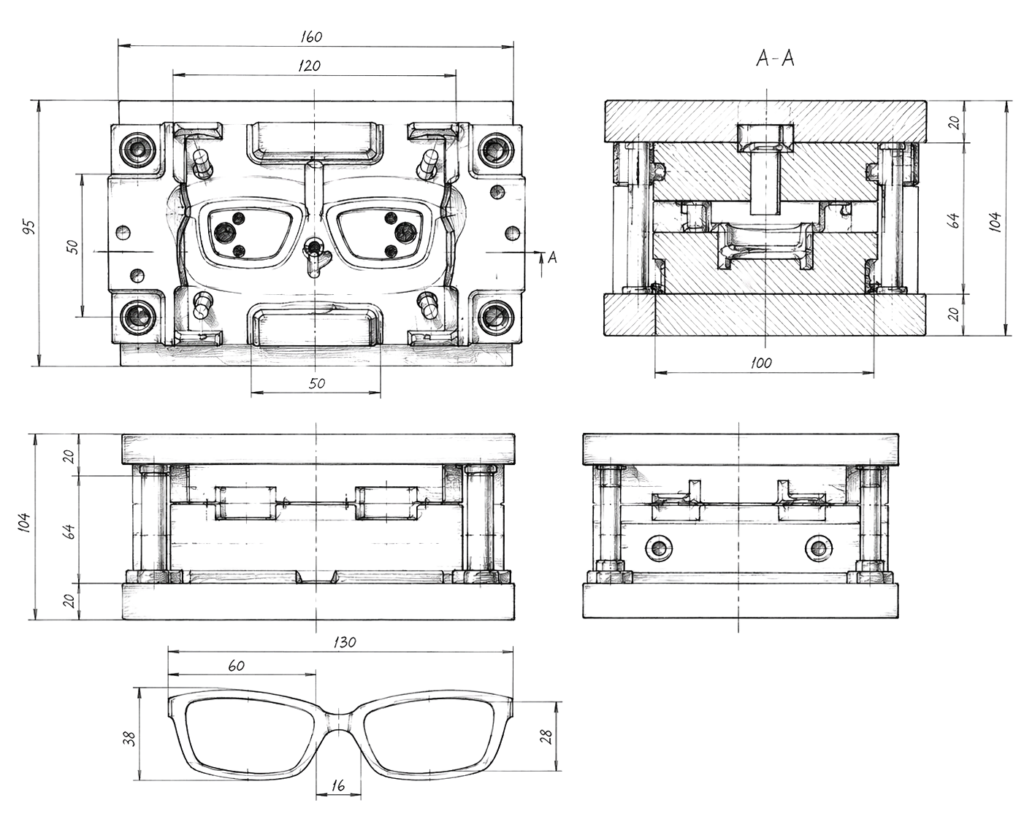
Modern plastic eyewear relies heavily on injection molding technology using high-grade polymers such as TR90, Polycarbonate (PC), and Nylon. Every minute detail—including bridge curves, temple hinge alignment, lens bevel grooves, and surface textures—is directly molded from the tool.
Impact of Precision on Frame Performance:
Lens Fitting Integrity: Prevents lens pop-outs or loose rim fits.
Symmetrical Alignment: Ensures even temple arm placement and balanced ear rest angles.
Hinge Stability: Maintains tight tolerances for smooth hinge action and durability.
Batch Consistency: Guarantees that the 100,000th frame matches the exact specifications of the 1st frame.
3. Mold Quenching vs. Unheated Tooling: Common Defect Solutions
Without adequate heat treatment, eyewear manufacturers encounter several critical quality and cost challenges:
| Common Manufacturing Issue | Root Cause in Mold | How Mold Quenching Solves It |
| Flash / Burrs on Frames | Soft mold edges wearing down under pressure | Hardens steel edges to maintain crisp parting lines. |
| Dimensional Drift | Thermal deformation of unhardened steel over time | Stabilizes steel matrix against thermal expansion stress. |
| Surface Imperfections | Scratches or erosion on mold cavity surfaces | Enhances surface hardness to preserve smooth and polished finishes. |
| High Scrap Rates | Loose tolerances leading to improper lens or hinge fit | Ensures uniform part dimensions across all production runs. |
| Frequent Tool Downtime | Accelerated wear requiring constant repair and maintenance | Multiplies tool lifespan and maximizes ROI on tooling investment |
4. Quenching and Tempering: The Dual-Step Process
Quenching alone increases steel hardness, but it can leave the material brittle and filled with internal stress. To overcome this, professional tooling engineers utilize a complete Quenching + Tempering heat-treatment strategy:
Quenching: Rapid cooling to achieve high hardness and wear resistance.
Tempering: Reheating the steel to a lower temperature to relieve internal stresses and increase toughness.
This ideal balance of hardness and toughness ensures the mold can withstand continuous mechanical impacts without cracking or chipping.
5. Sustainability and Economic Benefits for Eyewear Brands
Building precision eyewear tooling requires significant upfront capital. Maximizing mold longevity is both an economic and environmental imperative:
Tooling ROI: A quenched and tempered mold can produce hundreds of thousands of units with minimal wear, lowering per-unit production costs.
Sustainable Production: Extending mold lifespan reduces raw material waste, decreases energy-intensive replacement manufacturing, and supports sustainable OEM practices.
6. Partnering with Precision-Driven Manufacturers
At Looksee Eyewear, we understand that premium eyewear begins long before the first frame is injected. By investing in advanced mold engineering, premium steel selection, and rigorous heat treatment (quenching and tempering), we deliver reliable, high-precision eyewear manufacturing for global brands.