
How Hinge Placement Affects Comfort, Durability, and Design
When discussing eyewear design, most attention goes to frame shape, materials, or lens technology. However, one small component plays a major role in both comfort and durability: the hinge.
The hinge connects the front frame to the temples and allows the glasses to open and close smoothly. While often overlooked by consumers, hinge design can significantly influence wearing comfort, structural stability, and even the overall appearance of a frame.
For eyewear brands and product developers, understanding hinge placement is an important part of creating products that balance aesthetics, functionality, and long-term performance.
As a China eyewear manufacturer, we frequently work with different hinge structures to meet the needs of various frame designs and target markets.
Table of Contents
What Is an Eyeglass Hinge?
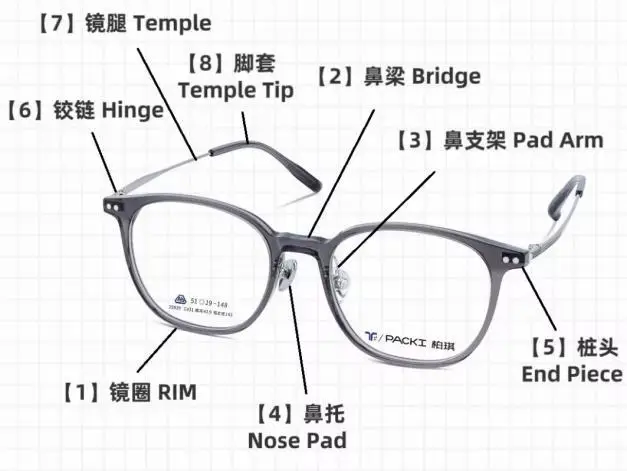
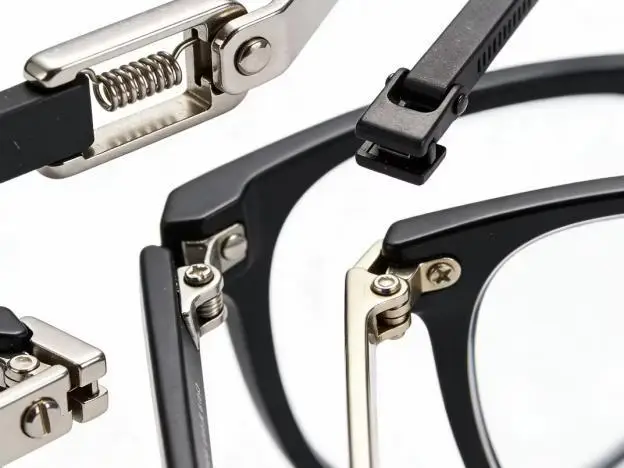
An eyeglass hinge is the mechanical connection between the frame front and the temples. Its primary function is to allow controlled movement while maintaining stability during daily use.
A well-designed hinge should provide:
- Smooth opening and closing
- Long-term durability
- Stable frame alignment
- Comfortable wearing performance
- Resistance to loosening over time
Although hinges are relatively small components, they can have a significant impact on the overall quality of a pair of glasses.
High Hinges vs Low Hinges: What's the Difference?
One of the most overlooked aspects of hinge design is placement.
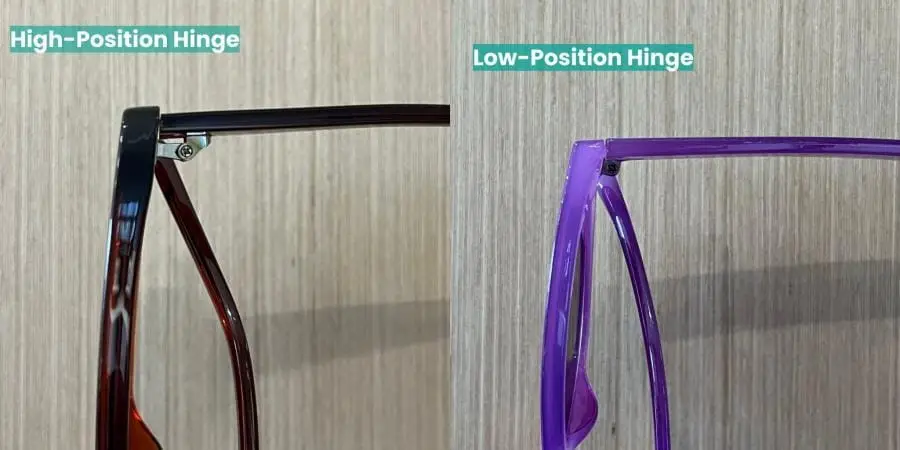
Depending on where the hinge is positioned on the frame front, eyewear can generally be categorized as using either a high hinge or a low hinge design.
High Hinge Design
A high hinge is positioned closer to the upper edge of the frame front, allowing the temples to extend from a higher point.
This design is commonly used in fashion eyewear, larger acetate frames, and premium optical collections.
Advantages of High Hinges:
1. Better Structural Balance
Because the hinge is positioned closer to the upper section of the frame, stress can be distributed more evenly throughout the structure. This may help reduce deformation over time and improve long-term durability.
2. Cleaner Folding Alignment
High hinges often allow the temples to fold more evenly against the frame, creating a neater appearance when the glasses are closed.
3. Improved Comfort for Certain Face Shapes
By changing the angle at which the temples contact the head, high hinge designs can reduce pressure on specific facial areas, particularly for wearers with wider faces or more prominent cheekbones.
4. Enhanced Premium Appearance
High hinge placement is frequently used in larger fashion frames because it creates cleaner visual proportions and contributes to a more refined overall design.
Low Hinge Design
A low hinge is positioned closer to the lower section of the frame front. This is one of the most common hinge configurations found in traditional eyewear.
Advantages of Low Hinges:
1. Secure Everyday Fit
Low hinge placement often allows the temples to follow the natural contour of the head more closely, helping improve wearing stability during daily activities.
2. Proven and Versatile Structure
Because low hinges have been widely used for decades, they are compatible with a broad range of frame styles and manufacturing processes.
3. Easier Adjustments and Maintenance
Low hinge systems are generally easier to adjust and service, making them practical for both consumers and optical retailers.
4. Suitable for Sports and Active Wear
The stable fit provided by many low hinge designs makes them popular in sports eyewear and performance-focused frames.
Does Hinge Placement Affect Eyewear Quality?
Hinge placement alone does not determine whether a frame is high quality or low quality.
Instead, the effectiveness of a hinge depends on several factors working together:
- Material selection
- Hinge construction
- Manufacturing precision
- Assembly accuracy
- Overall frame design
Both high and low hinge designs can deliver excellent performance when properly engineered and manufactured.
The best choice depends on the intended wearing experience, frame style, and target consumer.
Why Hinge Design Matters in Product Development?
For eyewear brands, hinge selection is not simply a technical decision.
It affects:
- Wearing comfort
- Product durability
- Frame aesthetics
- Manufacturing complexity
- Long-term customer satisfaction
During product development, hinge placement is often evaluated alongside frame materials, temple design, and overall product positioning.
Small structural adjustments can sometimes create significant differences in how a frame feels and performs in daily use.
Future Trends in Eyewear Hinge Design
As eyewear continues to evolve, hinge technology is becoming more sophisticated.
Current development trends include:
- Lightweight titanium hinge systems
- Hidden hinge structures
- Integrated hinge designs
- Flexible comfort-oriented mechanisms
- Simplified repair and maintenance solutions
The goal is not only to improve durability, but also to enhance comfort and create cleaner, more modern eyewear designs.


Final Thoughts
Although hinges are among the smallest components in eyewear, they play an important role in comfort, durability, and overall user experience.
Whether a frame uses a high hinge or a low hinge design, understanding how hinge placement affects performance can help brands make better product development decisions.
For eyewear manufacturers and designers, paying attention to these structural details is often what separates a good frame from a great one.