
A Step-by-Step Manufacturing Process
Table of Contents
Titanium eyewear is known for being lightweight, durable, and comfortable for everyday wear. But how is a titanium frame actually made?
Unlike many conventional plastic or metal frames, titanium eyewear requires specialized equipment, precise processing, skilled workers, and careful quality control.
As a China eyewear manufacturer, we work with titanium materials through multiple production stages, from raw material inspection to final quality control.
In this guide, we explain the titanium eyewear manufacturing process step by step, and show how a piece of titanium material is transformed into a finished eyewear frame.
What Are the Main Steps in Titanium Eyewear Manufacturing?
A typical titanium eyewear production process includes seven main stages:
- Raw material selection and inspection
- Precision cutting
- Laser welding
- Fine polishing
- IP vacuum plating
- Manual assembly
- Final quality inspection
Each stage affects the final appearance, structure, comfort, and consistency of the finished frame.
1. Raw Material Selection and Inspection
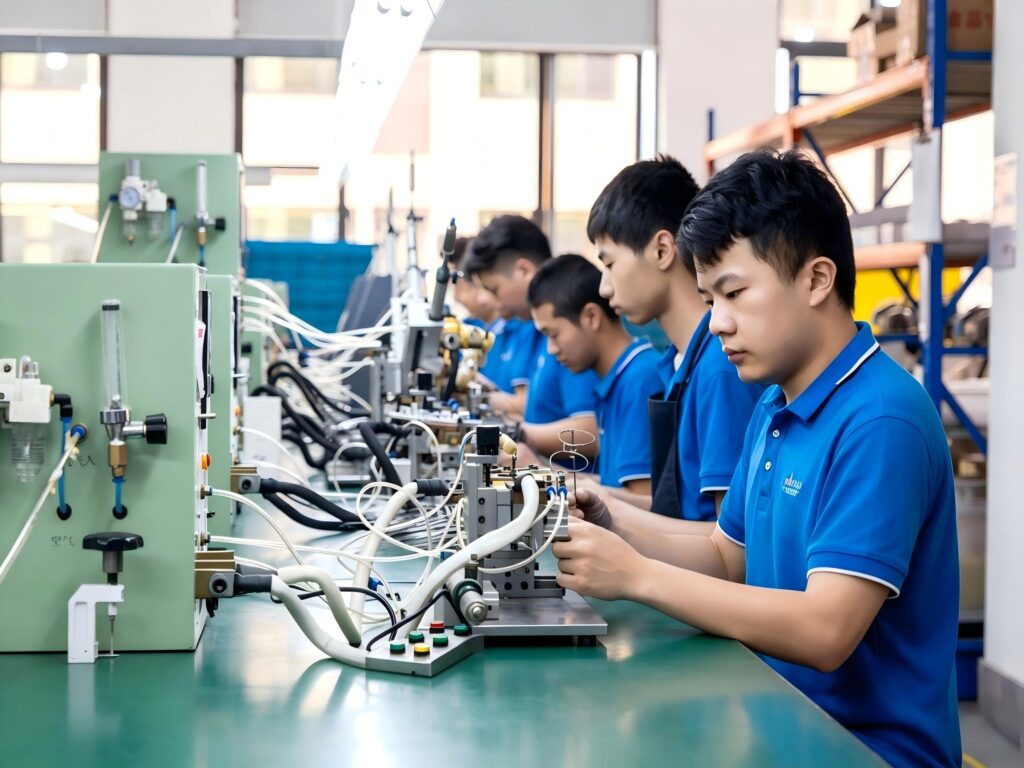
High-quality titanium eyewear starts with the right raw material.
Depending on the frame design, titanium eyewear production can involve titanium sheets, wires, and rods, as well as different titanium alloys.
Before production begins, our QC team checks each batch of incoming material. The inspection focuses on factors such as:
- Material specification
- Hardness
- Surface condition
- Dimensional consistency
Only materials that meet the required standards move into production.
This first step is important because material consistency affects the stability of later processes and the quality of the finished titanium frame.
2. Precision Cutting
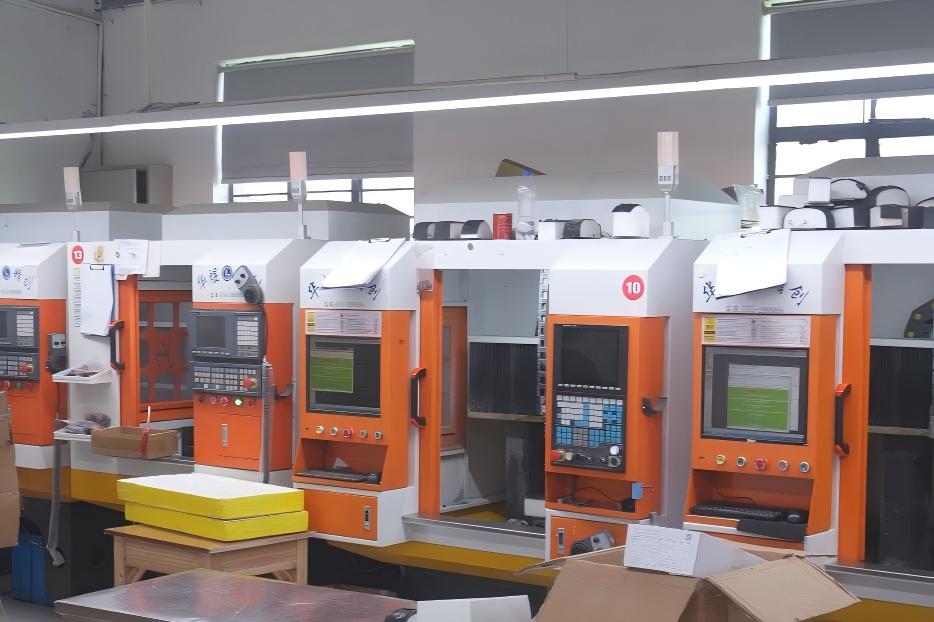
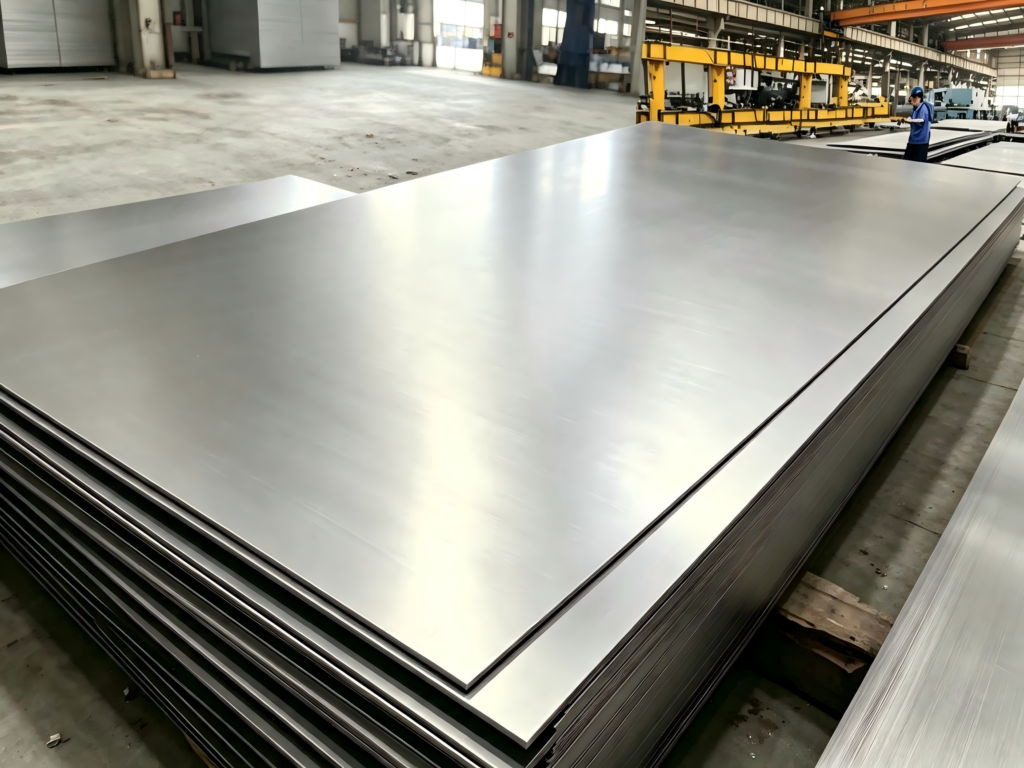
Once the material has passed inspection, it is cut into the components needed for the frame.
Titanium is a strong and tough material, so precision processing is required to achieve consistent shapes and dimensions.
In our factory, CNC and laser cutting equipment can be used to process titanium components such as:
- Rims
- Bridges
- Temple blanks
- Other structural components
After cutting, the parts go through deburring, cleaning, and inspection.
The goal is to make sure each component has the correct dimensions and clean edges before moving to welding and polishing.
3. Professional Laser Welding
Laser welding is an important step in titanium eyewear manufacturing.
Titanium requires careful control during welding because excessive heat or unsuitable processing conditions can affect the material and the appearance of the welded area.
Our production process uses professional laser welding equipment to create precise joints while controlling heat input.
Key areas that may require welding include:
- Frame corners
- Bridge joints
- Hardware bases
- Other structural connection points
After welding, workers manually inspect the joints to check whether they are strong, smooth, and free from visible defects.
For titanium eyewear, accurate welding is particularly important because small connection points can have a significant effect on the overall frame structure.
4. Multi-Stage Fine Polishing
After welding, the titanium frame may have welding marks or small uneven areas that need to be removed.
The frame therefore goes through multiple polishing stages.
The process can include:
Rough polishing → Fine polishing → Detailed hand polishing
Rough polishing is used to remove welding traces and larger surface marks.
Fine polishing further smooths the surface.
Hand polishing is then used for areas that are difficult to reach with machines.
This combination of machine and hand polishing helps create:
- Smooth edges
- A more consistent surface
- A refined touch
- A cleaner overall appearance
For titanium eyewear, polishing is not only an aesthetic process. It also helps prepare the frame surface for subsequent finishing.
5. IP Vacuum Plating
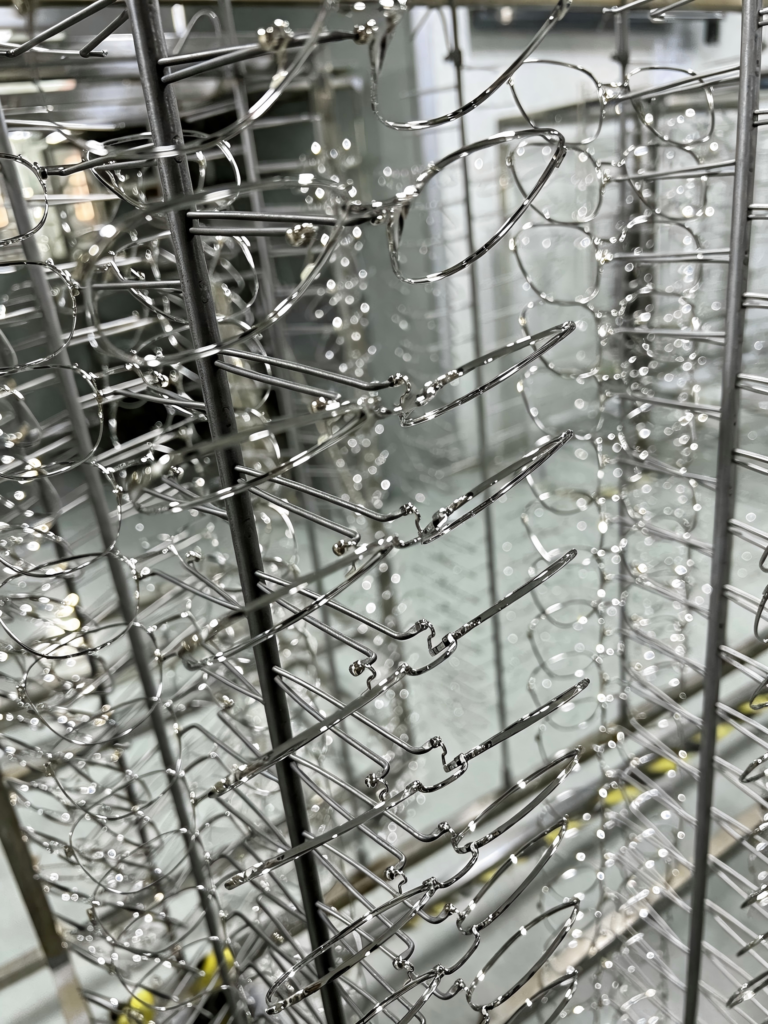
IP vacuum plating is commonly used as a finishing process for premium titanium eyewear.
Unlike conventional painting or electroplating methods, IP coating is applied in a vacuum environment.
The process creates a coating on the titanium surface that can provide a consistent appearance and help improve resistance to everyday wear.
Depending on the product design, different finishes can be developed, including:
- Silver
- Gunmetal
- Gold
- Matte black
Color and surface requirements should be confirmed during product development because the selected finish can affect both the appearance and production process.
For eyewear brands, consistent surface treatment is particularly important when producing multiple colors or large quantities of the same design.
6. Precision Manual Assembly
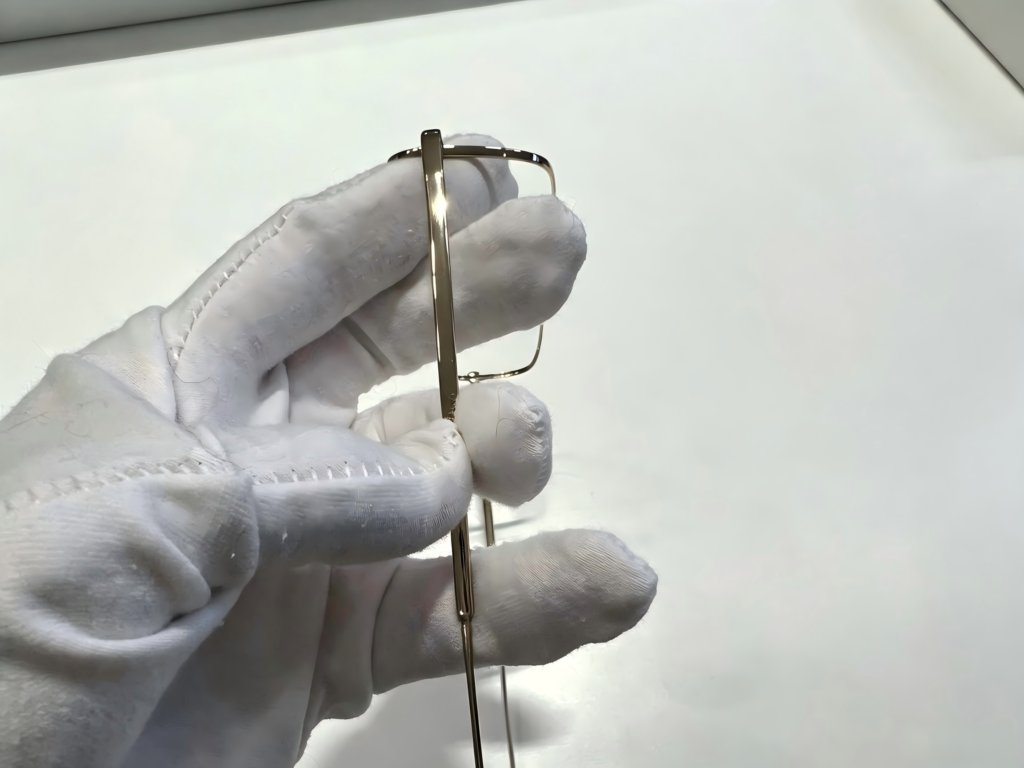
After surface treatment, the finished components move to the assembly stage.
Titanium eyewear often requires careful manual assembly because many small components need to be accurately positioned and adjusted.
Depending on the frame construction, assembly may include:
- Hinges
- Screws
- Nose pads
- Temple tips
- Other small components
Workers adjust the hinges to achieve smooth opening and closing and check that components are properly fitted.
The nose pads and temples are also adjusted to achieve appropriate balance and wearing comfort.
This stage connects the individual components into a complete eyewear frame and prepares the product for final inspection.
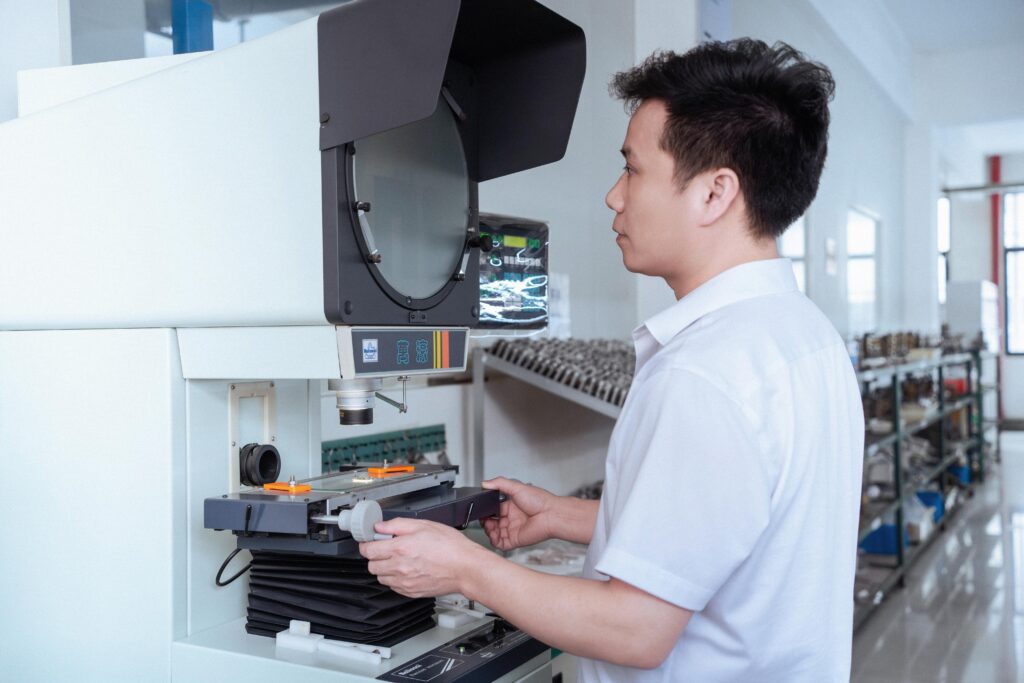
7. Final Quality Inspection
After surface treatment, the finished components move to the assembly stage.
Titanium eyewear often requires careful manual assembly because many small components need to be accurately positioned and adjusted.
Depending on the frame construction, assembly may include:
- Hinges
- Screws
- Nose pads
- Temple tips
- Other small components
Workers adjust the hinges to achieve smooth opening and closing and check that components are properly fitted.
The nose pads and temples are also adjusted to achieve appropriate balance and wearing comfort.
This stage connects the individual components into a complete eyewear frame and prepares the product for final inspection.
Why Does Titanium Eyewear Require So Many Production Steps?
A titanium frame may look simple after it has been completed, but its manufacturing process involves several precision operations.
From material selection and cutting to welding, polishing, plating, assembly, and inspection, each stage has a different purpose.
The combination of these processes helps manufacturers control:
- Frame dimensions
- Structural quality
- Surface appearance
- Component alignment
- Wearing comfort
- Production consistency
This is why titanium eyewear manufacturing requires more than simply forming a piece of titanium into a frame.
How Does Manufacturing Affect the Quality of Titanium Eyewear?
The quality of a titanium frame depends on the entire manufacturing process, not on a single production step.
For example:
Material inspection helps ensure consistent incoming materials.
Precision cutting helps maintain accurate component dimensions.
Laser welding creates controlled structural connections.
Polishing improves the surface finish.
IP plating creates the required color and surface treatment.
Manual assembly brings the individual components together and allows fine adjustment.
Final QC checks whether the finished frame meets the required standards.
In other words, the final quality of titanium eyewear is the result of many controlled processes working together.
Titanium Eyewear Manufacturing at Looksee
At Looksee, titanium eyewear production combines precision equipment, manual craftsmanship, and multi-stage quality control.
Our process covers material inspection, precision cutting, laser welding, polishing, IP vacuum plating, manual assembly, and final inspection.
For custom eyewear development, manufacturing requirements can also be evaluated together with the frame structure, material selection, finishing requirements, and production specifications.
As a China eyewear manufacturer, our goal is to turn a product design into a consistent and manufacturable titanium eyewear product while maintaining quality throughout the production process.
Frequently Asked Questions About Titanium Eyewear Manufacturing
How is titanium eyewear made?
Titanium eyewear is generally produced through several stages, including material inspection, precision cutting, welding, polishing, surface treatment, assembly, and final quality inspection.
Is titanium difficult to manufacture?
Titanium requires careful processing and precise equipment. Processes such as cutting, welding, polishing, and finishing need to be properly controlled to achieve consistent results.
Why is laser welding used for titanium eyewear?
Laser welding allows manufacturers to create precise joints while controlling heat input. It is suitable for the small and detailed structural connections found in titanium eyewear.
What is IP plating on titanium glasses?
IP plating is a vacuum-based surface finishing process used to create different colors and surface effects on titanium eyewear. It can also improve resistance to everyday wear.
How is titanium eyewear quality checked?
Quality inspection can include checking the frame dimensions, surface finish, color consistency, welding quality, hinge movement, plating quality, and overall frame alignment. Durability checks may also be performed.
Can a China eyewear manufacturer produce custom titanium frames?
Yes. Custom titanium eyewear can be developed according to the required frame structure, dimensions, materials, surface finish, components, and other product specifications, subject to manufacturing feasibility.
Conclusion
A finished titanium frame is the result of many carefully controlled manufacturing stages.
From raw material selection and precision cutting to laser welding, polishing, IP vacuum plating, manual assembly, and final QC, every process contributes to the final product.
Understanding how titanium eyewear is made can help eyewear brands and product developers better evaluate manufacturing capabilities and make more informed decisions during product development.
Behind a lightweight titanium frame is not just the material itself, but a combination of precision manufacturing, skilled workmanship, and consistent quality control.