
Table of Contents
In the eyewear industry, product quality is determined by much more than just frame design or lens technology. One of the most critical, precision-driven stages in metal frame manufacturing is the metal polishing process.
Polishing defines the final aesthetic appeal, skin-contact comfort, structural durability, and plating performance of metal glasses. Because different metals possess distinct physical properties, the required polishing time and technique vary significantly across materials. Professional manufacturers, such as Looksee Eyewear, approach polishing as an engineered science rather than a simple finishing step.
📌 B2B Executive Summary
Metal polishing in eyewear manufacturing removes micro-burrs, enhances corrosion resistance, improves coating adhesion, and optimizes surface comfort. Polishing time must be tailored to the metal type: Harder metals like Stainless Steel require multi-stage, longer polishing for a mirror finish, whereas heat-sensitive metals like Titanium and Memory Metal (Nitinol) require shorter, low-heat precision processing. Over-polishing can deform structural edges or compromise flexible alloys, while under-polishing leads to rough surfaces and poor plating adhesion.
1. Why Precision Polishing Time Matters in Frame Production
Metal frames undergo intensive mechanical operations during production, including cutting, bending, stamping, welding, and tumbling. These steps create surface micro-imperfections, sharp edges, and oxide layers.
Core Functions of Controlled Metal Polishing:
Micro-Burr & Edge Removal: Protects wearers from sharp metallic edges and improves fit comfort.
Enhanced Corrosion & Oxidation Resistance: Seals surface micro-voids to prevent moisture penetration.
Optimized Plating & Coating Adhesion: Prepares smooth, clean metal surfaces for PVD, electroplating, or protective lacquers.
Visual & Tactile Perception: Delivers a luxury hand-feel and desired finish (mirror, satin, matte, or antique).

2. Metal Comparison: Polishing Time, Finish Type & Key Controls
The table below summarizes how polishing parameters vary across primary eyewear metals:
| Metal Type | Polishing Time | Target Surface Finish | Critical Engineering Controls |
| Stainless Steel | Medium to Long | High Gloss / Mirror | Requires 3-stage process (rough grinding, intermediate polishing, mirror finishing). |
| Titanium | Short to Medium (Precision) | Satin / Brushed / Matte | Heat-sensitive; requires strict temperature control to prevent oxidation. |
| Aluminum Alloy | Short | Matte / Anodized | Soft metal; over-polishing weakens surface structure; requires immediate coating. |
| Memory Metal (Nitinol) | Medium (Low-Heat) | Functional Smooth | Low-temperature control required to preserve superelasticity and shape memory. |
| Brass & Copper Alloys | Medium to Long | High-Shine / Vintage Antique | Delivers rich aesthetics; requires protective sealers to prevent rapid tarnishing. |
3. Detailed Metal Processing Breakdowns
Ⅰ.Stainless Steel Frames: Controlled Multi-Stage Polishing
Material Traits: Exceptional structural strength, high hardness, and corrosion resistance.
Polishing Strategy: Due to its hardness, stainless steel demands a structured three-step workflow: rough grinding to remove weld marks, intermediate smoothing, and final high-gloss mirror buffing.

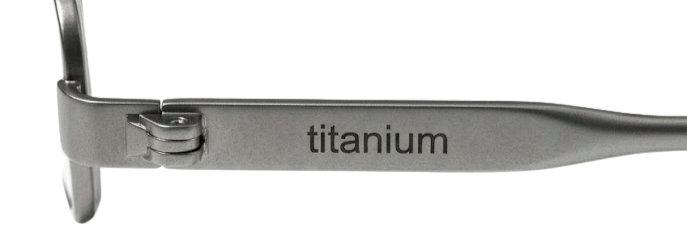
Ⅱ.Titanium Frames: Precision Low-Heat Finishing
Material Traits: Ultra-lightweight, hypoallergenic, high strength-to-weight ratio.
Polishing Strategy: Titanium reacts to friction-induced heat, which can cause surface discoloration or oxidation. Manufacturers utilize specialized low-friction compounds and precision techniques to achieve high-end brushed or satin finishes.
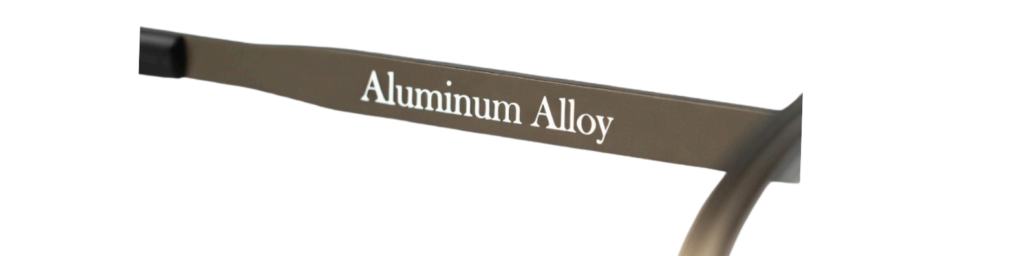
Ⅲ.Aluminum Alloy Frames: Fast, Soft-Metal Buffing
Material Traits: Extremely light, cost-effective, ideal for fashion eyewear.
Polishing Strategy: Aluminum is a soft metal prone to over-abrasion. Polishing cycles are kept short to prepare the surface for anodizing or protective color coatings without compromising structural geometry.
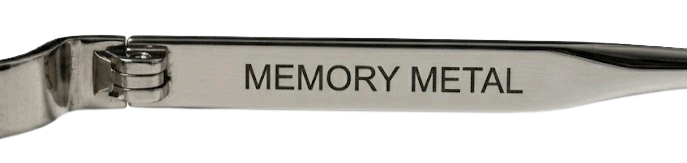
Ⅳ.Memory Metal (Nitinol): Temperature-Controlled Processing
Material Traits: Superelasticity and shape-memory performance.
Polishing Strategy: Excessive heat during polishing can alter the crystal lattice structure, degrading its flexible memory characteristics. Controlled, low-temperature polishing ensures smooth contours while preserving material elasticity.
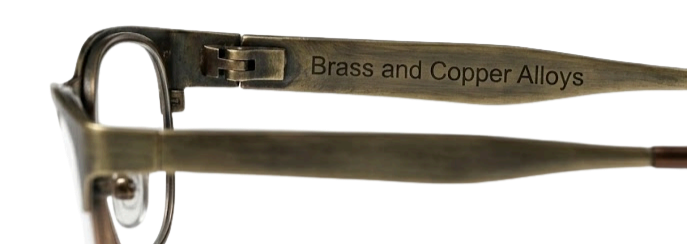
Ⅴ.Brass & Copper Alloys: Decorative & Vintage Finishing
Material Traits: Classic aesthetic appeal, warm metallic tones, prone to natural oxidation.
Polishing Strategy: Extended polishing cycles bring out a rich shine for vintage and designer frames. Post-polishing protective clear coatings are essential to prevent tarnish.
4. How Polishing Optimization Impacts Overall Quality & Manufacturing Cost
In modern OEM/ODM eyewear manufacturing, the goal is not to polish longer, but to polish smarter.
Optimizing polishing time directly impacts five critical quality metrics:
Skin Comfort & Ergonomics: Reduces skin irritation along contact points (temples, nose bridge).
Plating & PVD Durability: Flawless surfaces prevent peeling or uneven electroplating.
Corrosion Longevity: Eliminates microscopic pits where sweat and oil cause oxidation.
Brand Aesthetics: Tailors frame appearance precisely to luxury, sporty, or vintage brand guidelines.
Cost & Yield Efficiency: Minimizes tool wear and scrap rates while maintaining high production throughput.
5. Precision Surface Finishing at Looksee Eyewear
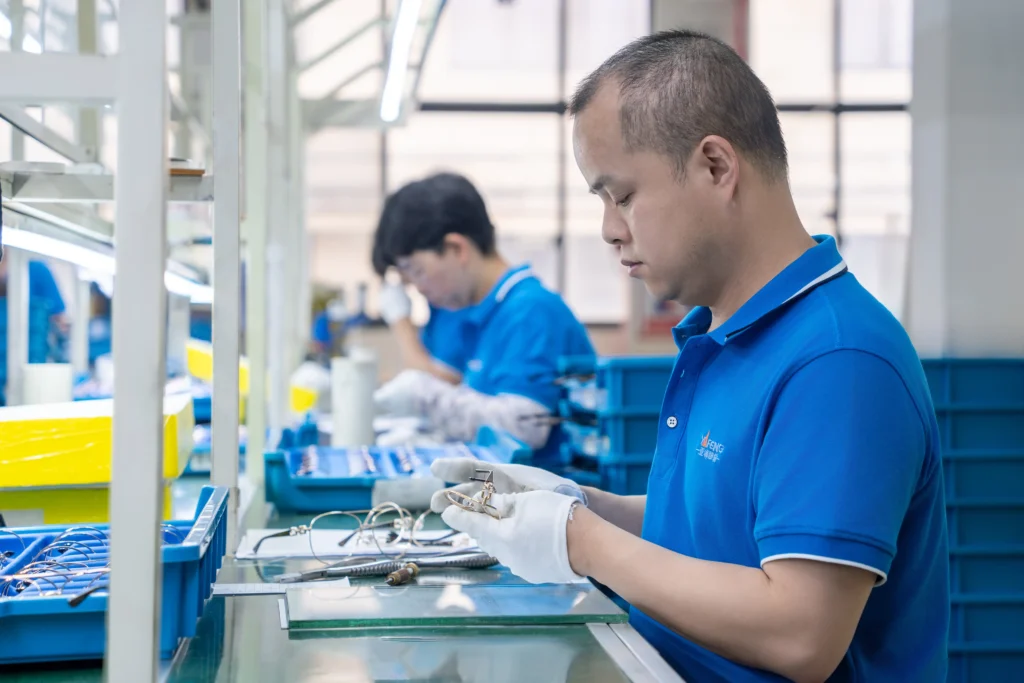
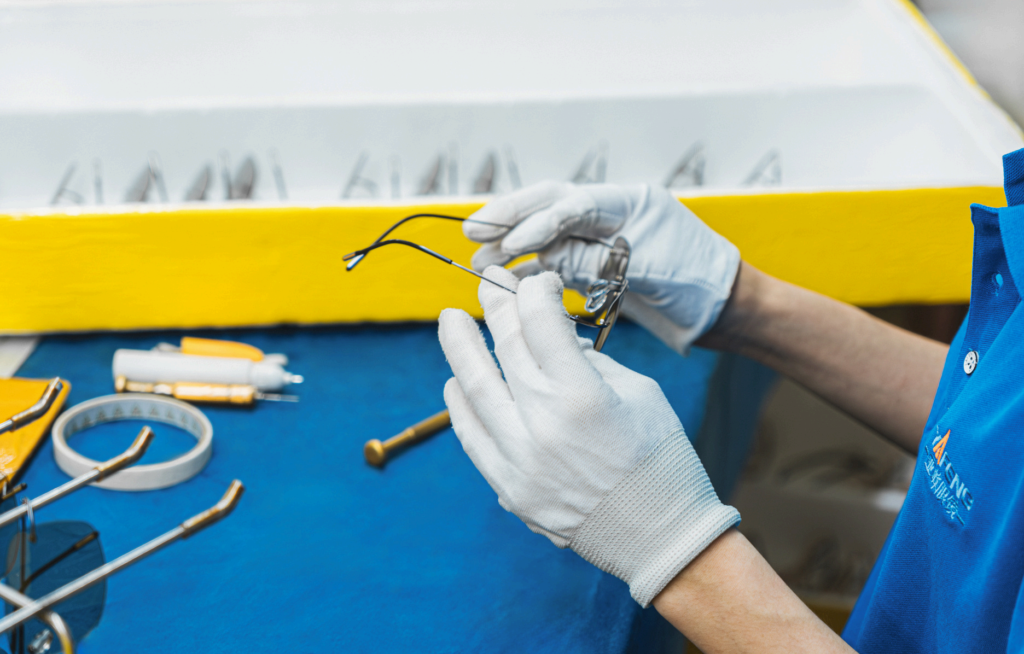
Achieving consistent frame quality requires strict standard operating procedures (SOPs) and state-of-the-art finishing equipment. At Looksee Eyewear, we customize polishing parameters based on metal composition, frame thickness, and client finish specifications.