

When selecting sunglasses, most people focus on frame design—but lens technology plays an equally important role in performance, comfort, and protection. In this guide, we break down common lens materials and explain the differences between standard and polarized lenses, helping you make a more informed choice.
Table of Contents
Common Lens Materials
When selecting sunglasses, most people focus on frame design—but lens technology plays an equally important role in performance, comfort, and protection. In this guide, we break down common lens materials and explain the differences between standard and polarized lenses, helping you make a more informed choice.
AC (Acrylic)
AC lenses are lightweight and cost-effective, making them a popular choice for fashion sunglasses. However, they offer relatively low optical clarity and durability compared to other materials.
Best for: Promotional or budget-friendly eyewear
PC (Polycarbonate)
Polycarbonate lenses are impact-resistant and lightweight, making them ideal for active lifestyles. They provide better durability than AC lenses and are widely used in sports and safety eyewear.
Best for: Sports, cycling, and protective eyewear
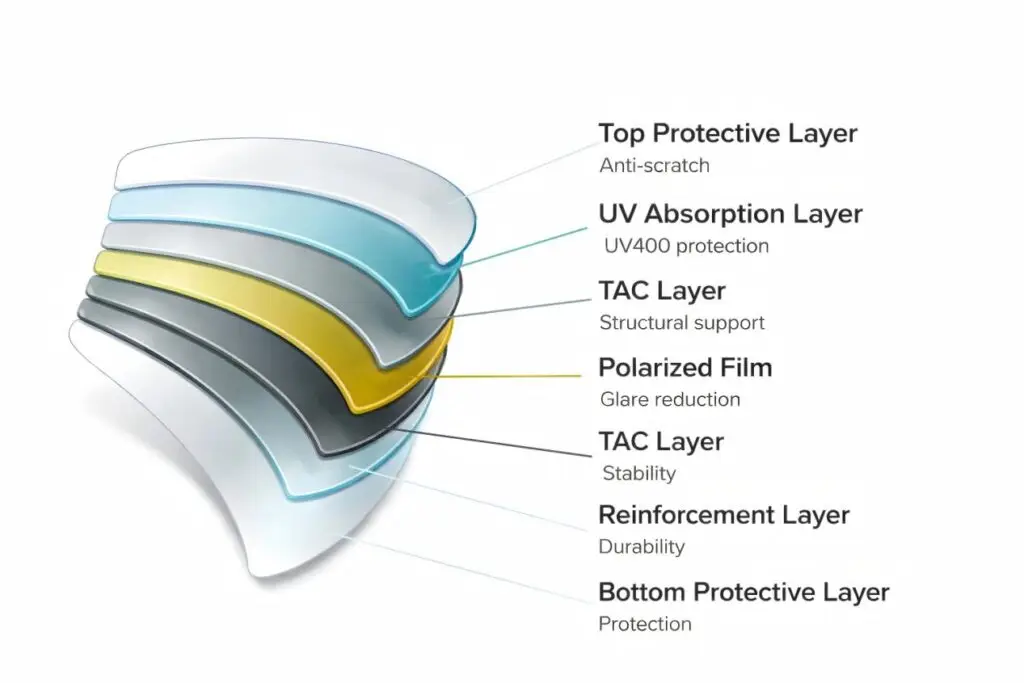
TAC (Triacetate Cellulose)
TAC is one of the most common materials used for polarized lenses. It offers a good balance of optical clarity, lightweight comfort, and affordability.
Best for: Everyday polarized sunglasses
CR39
CR39 lenses provide excellent optical clarity and are more scratch-resistant than AC lenses. They are heavier than PC but offer superior visual quality.
Best for: High-quality optical and sun lenses
Nylon
Nylon lenses are highly flexible, impact-resistant, and perform well under extreme temperatures. They are often used in premium sports eyewear.
Best for: High-performance sports and outdoor activities
| Material | Full Name | Key Features | Advantages | Best Use |
| AC | Acrylic | Basic plastic lens | Lightweight, low cost | Fashion / promotional eyewear |
| PC | Polycarbonate | Impact-resistant material | Durable, lightweight, safety | Sports, cycling, protective eyewear |
| TAC | Triacetate Cellulose | Common polarized base material | Good clarity, lightweight, cost-effective | Everyday polarized sunglasses |
| CR39 | Columbia Resin 39 | Optical-grade plastic | High clarity, good visual quality | Optical & premium sunglasses |
| NYLON | Polyamide | High-performance material | Flexible, impact-resistant, temperature stable | Professional sports eyewear |
Polarized vs. Non-Polarized Lenses
Polarized Lenses (P)
Polarized lenses are designed to filter out reflected light (glare), especially from flat surfaces like water, snow, and roads.
Key benefits:
- Reduces glare and visual noise
- Enhances contrast and clarity
- Improves comfort in bright environments
Ideal for:
- Driving
- Fishing
- Skiing
- Outdoor sports
Note:
Polarized lenses may interfere with viewing LCD/LED screens (such as phones, dashboards, or cockpit instruments), making them less suitable for certain professional or technical applications.
Non-Polarized Lenses (UV Protection Only)
These lenses primarily provide UV protection without glare reduction.
Key benefits:
- Suitable for daily casual wear
- Compatible with all digital screens
- More cost-effective
Ideal for:
- General outdoor use
- Fashion eyewear
| Type | Function | Advantages | Limitations | Best Use |
| Polarized (P) | Filters reflected light (glare) | Reduces glare, improves clarity & contrast | May affect digital screen visibility | Driving, fishing, skiing, outdoor sports |
| Non-Polarized | UV protection only | Compatible with all screens, lower cost | No glare reduction | Daily wear, fashion use |
How to Choose the Right Lens
Your ideal lens depends on your usage scenario:
Quick Selection Guide
| Scenario | Recommended Lens |
| Sports & Outdoor | TAC Polarized/ PC Polarized / Nylon Polarized |
| Driving | PC / CR39/ Nylon |
| Daily Casual | PC / TAC/ CR39/ Nylon |
| Premium Visual Quality | CR39 Polarized/ Nylon Polarized |
| High Durability Needs | Nylon/CR39 |
Conclusion
Understanding lens materials and polarization can significantly improve your eyewear experience. Whether you prioritize clarity, durability, or glare reduction, choosing the right combination ensures both comfort and performance in any environment.