

When people choose a pair of glasses, they often focus on the frame shape, lens color, or material. However, one manufacturing process has a major impact on how a frame looks and performs over time: plating.
The quality of a frame’s surface finish affects far more than its appearance. It influences scratch resistance, corrosion resistance, color stability, skin compatibility, and long-term durability.
Today, two plating technologies dominate the eyewear industry: electroplating and PVD (Physical Vapor Deposition), also known as IP plating. Each offers different advantages depending on the product’s positioning, performance requirements, and budget.
In this guide, we’ll explain how eyewear plating works, compare the two most common plating methods, and explore the manufacturing factors that determine coating quality.
Table of Contents
What Is Eyewear Plating?
Eyewear plating is a surface finishing process that deposits a thin protective coating onto metal eyeglass frames.
Although many people associate plating with color, its primary purpose is to improve both appearance and performance.
A properly applied coating can help:
• Improve corrosion resistance
• Reduce daily wear and scratches
• Enhance color consistency
• Increase resistance to sweat and humidity
• Improve skin compatibility with nickel-free systems
For metal eyewear, plating is often one of the most important steps in determining the product’s lifespan.
Electroplating vs. PVD: What's the Difference?
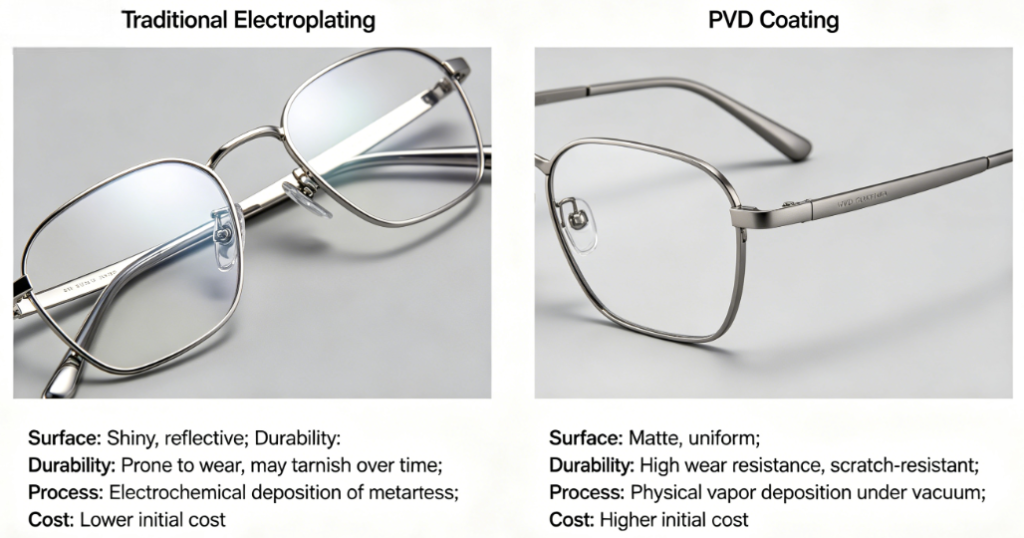
The eyewear industry primarily uses two plating technologies.
| Feature | Electroplating | PVD (IP Plating) |
|---|---|---|
| Process | Electrochemical deposition | Physical vapor deposition in vacuum |
| Durability | Good | Excellent |
| Corrosion Resistance | Moderate | High |
| Color Stability | Good | Excellent |
| Environmental Impact | Higher | Lower |
| Cost | Lower | Higher |
| Typical Application | Standard eyewear | Premium eyewear |
This comparison helps brands select the most appropriate coating based on product positioning and target markets.
Electroplating: A Proven Manufacturing Process
Electroplating has been used in eyewear manufacturing for decades.
The process uses an electric current to deposit metal ions onto the frame surface, creating decorative and protective coatings.
Common plating materials include:
• Copper
• Nickel
• Chromium
• Gold-tone finishes
Advantages:
▪ Cost-effective
▪ Wide variety of finishes
▪ Suitable for complex frame shapes
▪ Mature manufacturing process
Limitations:
Compared with PVD, electroplating generally provides lower resistance to corrosion and long-term wear, particularly in environments with frequent exposure to sweat or moisture.
Fortunately, modern electroplating technology has evolved significantly. Cyanide-free and nickel-free plating systems are becoming increasingly common, helping manufacturers improve both environmental performance and skin compatibility.
PVD (IP Plating): Designed for Premium Eyewear
Physical Vapor Deposition (PVD), often referred to as IP plating in the eyewear industry, is performed inside a vacuum chamber.
During the process, metal atoms are vaporized and deposited onto the frame surface, forming a dense and highly adhesive coating.
Advantages:
▪ Excellent adhesion
▪ Superior corrosion resistance
▪ Outstanding color durability
▪ No wastewater discharge
▪ Nickel-free compatibility
Because of these characteristics, PVD has become the preferred choice for premium optical frames, sunglasses, and sports eyewear that require long-term durability.
Why the Plating Process Matters?
Choosing the right plating technology is only part of the equation.
Consistent quality depends on how well every production stage is controlled.
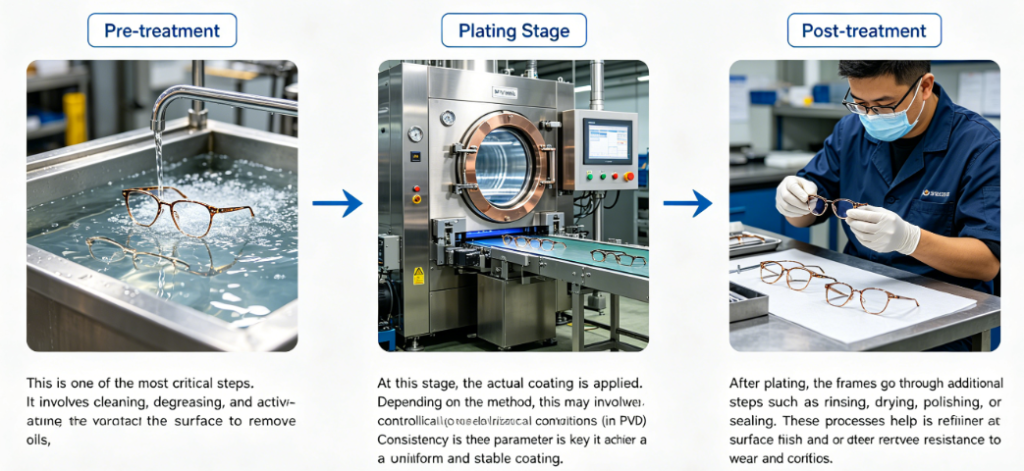
1. Surface Preparation
Before plating begins, the frame must be thoroughly cleaned and activated.
Even microscopic contaminants can reduce coating adhesion and increase the risk of peeling.
2. Coating Application
Whether using electroplating or PVD, stable process parameters are essential.
Voltage, temperature, vacuum conditions, and coating time all influence the final coating quality.
3. Post-Treatment
After plating, frames are rinsed, polished, dried, and sealed.
These finishing processes improve both appearance and resistance to corrosion and wear.
What Determines Plating Quality?
Many people assume that plating quality depends only on the equipment.
In reality, it is influenced by several factors working together:
• Surface cleanliness
• Base material compatibility
• Coating thickness
• Process consistency
• Environmental controls
• Quality inspection
Even when two frames use the same plating technology, differences in process control can result in significant variations in durability and appearance.
Manufacturer's Insight: Why Process Control Matters
From a manufacturing perspective, plating quality is determined not only by the coating itself but by the consistency of the entire production process.
At Looksee, plating quality is monitored throughout surface preparation, coating application, and final finishing. We use both electroplating and PVD technologies depending on the product requirements and target market.
Our production team also performs routine quality evaluations, including coating adhesion assessments, appearance inspections, and corrosion resistance verification, helping ensure consistent performance across different frame collections.
Frequently Asked Questions
Is PVD better than electroplating?
PVD generally offers better corrosion resistance, stronger adhesion, and longer-lasting color performance. Electroplating remains an excellent option for many commercial eyewear collections because of its flexibility and lower production cost.
Does plating affect skin sensitivity?
Yes. Nickel-free plating systems can help reduce the risk of skin irritation for users with sensitive skin.
Why do some eyeglass frames fade faster than others?
Color durability depends on multiple factors, including plating technology, coating thickness, daily wear, sweat exposure, and manufacturing quality.
Which plating method is best for premium eyewear?
PVD is widely used for premium eyewear because it provides excellent durability, corrosion resistance, and long-term color stability.

Plating is much more than a decorative finish. It is a critical manufacturing process that directly affects durability, corrosion resistance, wearing comfort, and overall product quality.
Understanding the differences between electroplating and PVD helps eyewear brands make more informed product development decisions while selecting the most suitable manufacturing solution for their target market.